
AV Simulation
A Python-based microscopic traffic simulator for studying autonomous and human driver behavior in realistic transportation networks.
Related Fields: Intelligent Transportation Systems, Transportation Modeling, Python Development, Simulation Framework Design, Multi-Agent Simulation, Network Analysis, Traffic Flow Analysis
Project Overview
Understanding traffic dynamics requires realistic simulation environments capable of representing both individual driver decisions and their collective impact on the transportation network. This project was developed as a microscopic traffic simulation framework entirely in Python using object-oriented software design principles.
The simulator models roads, intersections, vehicles, and traffic control elements as independent objects, allowing the system to represent complex urban traffic scenarios in a modular and extensible manner. Multiple driver profiles were implemented to capture different driving styles and decision-making behaviors, enabling heterogeneous traffic conditions similar to those observed in the real world.
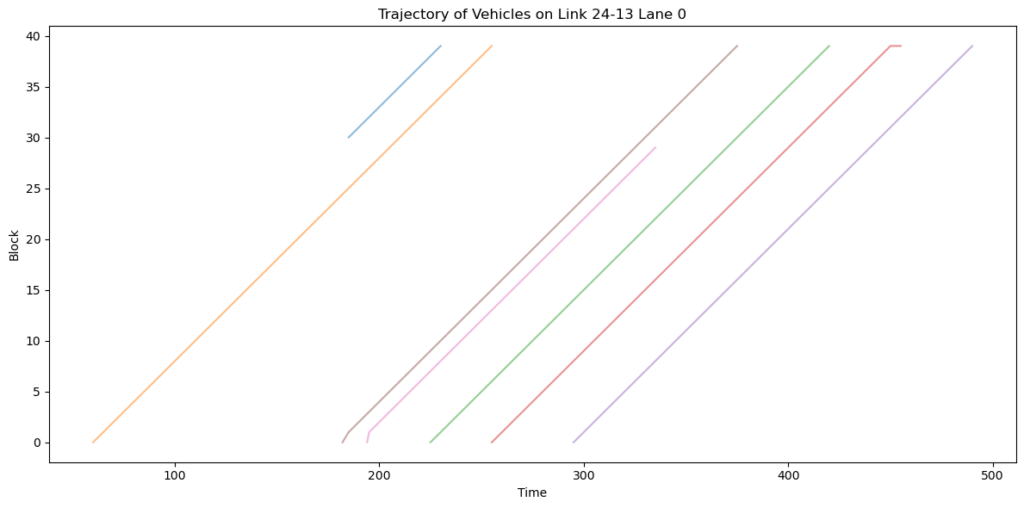
Vehicle interactions—including acceleration, deceleration, lane-following behavior, and responses to surrounding traffic—were modeled to reproduce realistic traffic flow. Each vehicle continuously reacts to nearby vehicles and the road environment, allowing congestion and traffic patterns to emerge naturally from individual driving decisions.
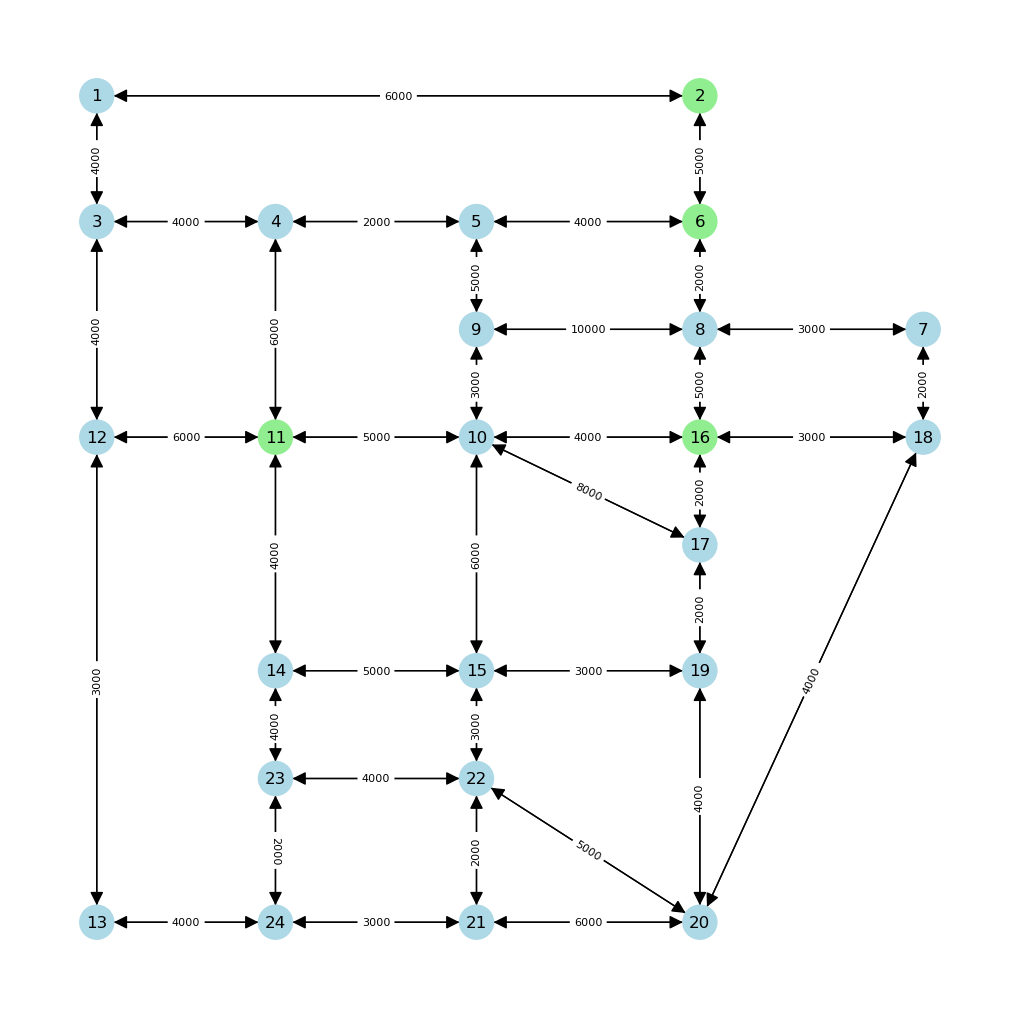
To evaluate the framework under realistic conditions, the simulator was applied to the well-known Sioux Falls transportation network. Various traffic scenarios were executed to analyze network performance, vehicle movements, and the effects of different driver behavior models on overall traffic conditions.
The project demonstrates expertise in object-oriented software engineering, traffic simulation, behavioral modeling, and transportation systems analysis, while providing a flexible foundation for future research in intelligent transportation systems and autonomous vehicle simulation.
Results of The Project
Code Sources :
This project was implemented in Python.
Here you can find all the code and documentation :